
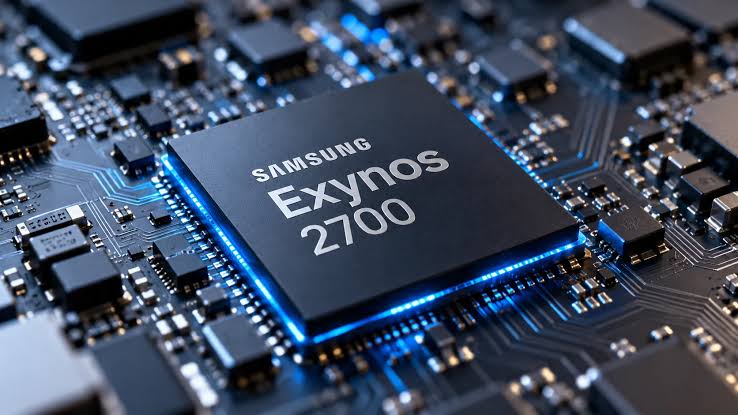
Samsung may be preparing a significant change in how it handles Exynos-powered flagship devices, with new information suggesting that the Galaxy S27 Pro will receive a more integrated hardware and software development approach.
According to information obtained by Schrödinger's Leaks, Samsung intends to let the Exynos 2700 operate without the software restrictions that have reportedly affected previous Exynos-powered Galaxy S generations.
More importantly, the company is said to be conducting a joint validation process involving its Mobile eXperience (MX) division and System LSI. Both divisions are reportedly working closely throughout the development process, with responsibilities spanning chip design, optimisation and compatibility.
If accurate, this could represent a meaningful change in Samsung's approach to its in-house processors.
A closer relationship between MX and System LSI
Samsung's semiconductor division and mobile division have different responsibilities. System LSI develops Samsung's application processors, while MX integrates those processors into Galaxy devices alongside the software and hardware experience.
The reported joint validation process suggests that Samsung wants closer collaboration between these teams, rather than leaving optimisation and compatibility as largely separate stages of development.
This matters because smartphone performance is not determined by silicon specifications alone. Scheduling, power management, thermal behaviour, memory management and software compatibility all influence how a processor performs in a finished device.
A closer development relationship could allow Samsung to address these areas earlier and make better use of the Exynos 2700's capabilities.
It could also help reduce the differences between Exynos and Snapdragon variants of the same Galaxy generation, although the extent of any improvement remains to be seen.
Galaxy S27 Pro could take a different position in the lineup

Our sources indicate that the Galaxy S27 Ultra will remain Samsung's highest-end flagship, while the S27 Pro is being positioned as the company's product flagship for the next generation.
That distinction is particularly interesting.
The Ultra is traditionally the device Samsung uses to showcase its most comprehensive hardware offering. However, the reported positioning of the S27 Pro suggests that Samsung could be placing greater emphasis on the Pro model as a central part of its next-generation product strategy.
The reported Exynos 2700 integration could be an important part of that direction.
According to our sources, the Exynos-powered S27 Pro could even outperform the S27 Ultra in several tasks.
This should not be interpreted as a claim that the Exynos 2700 will outperform every processor configuration across all workloads. Performance can vary considerably depending on the application, software optimisation, power limits and thermal conditions.
Nevertheless, the possibility is notable, particularly if Samsung is giving its in-house processor greater freedom to operate within the Galaxy ecosystem.
What about the Galaxy S27 Ultra?
This is where things become less clear.
Our attempts to obtain specific information about an Exynos-powered Galaxy S27 Ultra have so far been unsuccessful. We have not been able to establish whether Samsung intends to use the Exynos 2700 in the Ultra, or whether the device will remain exclusively powered by Snapdragon across its markets.
However, if Samsung is committing significant resources to the Exynos 2700 for the S27 Pro, it would be premature to rule out its presence elsewhere in the lineup.
An Exynos-powered S27 Ultra in selected markets remains a possibility worth watching, particularly given Samsung's history of distributing different chipsets across regional Galaxy variants.
There is another detail worth revisiting.
As previously reported by Schrödinger's Leaks on Telegram, System LSI secured additional Galaxy S27 series units. What exactly this means remains unclear. It could relate to development, testing or validation activities, but we cannot establish the intended purpose of those additional units at this stage.
Still, the earlier report takes on greater significance alongside the latest information about MX and System LSI working together on Exynos 2700 validation.
It raises a broader question: is Samsung preparing the Exynos 2700 for a wider role across the Galaxy S27 family, rather than limiting its ambitions to a single model?
For now, we cannot confirm that. But the possibility of regional Exynos variants, including an S27 Ultra configuration, should not be dismissed.
Could this change Exynos' position in Galaxy?
For years, the relationship between Exynos and Samsung's flagship Galaxy devices has attracted criticism, particularly around performance consistency, power efficiency and differences between regional variants.
A more closely coordinated development process could help address some of those concerns.
However, joint validation alone does not guarantee a better processor. Samsung will still need to demonstrate improvements through sustained performance, power efficiency, thermal stability and real-world software behaviour.
The Exynos 2700's final implementation will be just as important as its underlying silicon capabilities.
If Samsung's reported approach proves successful, the Galaxy S27 generation could mark a meaningful shift in how the company positions its in-house silicon.
For now, the most interesting development is not simply whether Exynos can outperform Snapdragon. It is whether Samsung is finally prepared to give its own processor the hardware and software cooperation needed to compete at its full potential.
PhoneFuturist will continue following developments surrounding the Exynos 2700 and Galaxy S27 lineup.